
This month, you have the chance to win our ENTIRE annual gift-list of gaming goodies thanks to our buddies at Hachette Boardgames UK. You’ve still got time to get copies for yourself, or you can look forward to a glorious stack in the new year 😉
We’ve deliberately gone for a range of really well-priced games that won’t hit the wallet too hard, either.
Here’s what we’re recommending this year.
Game for the Video Gamers
Gwent: The Legendary Card Game (RRP £43.99)
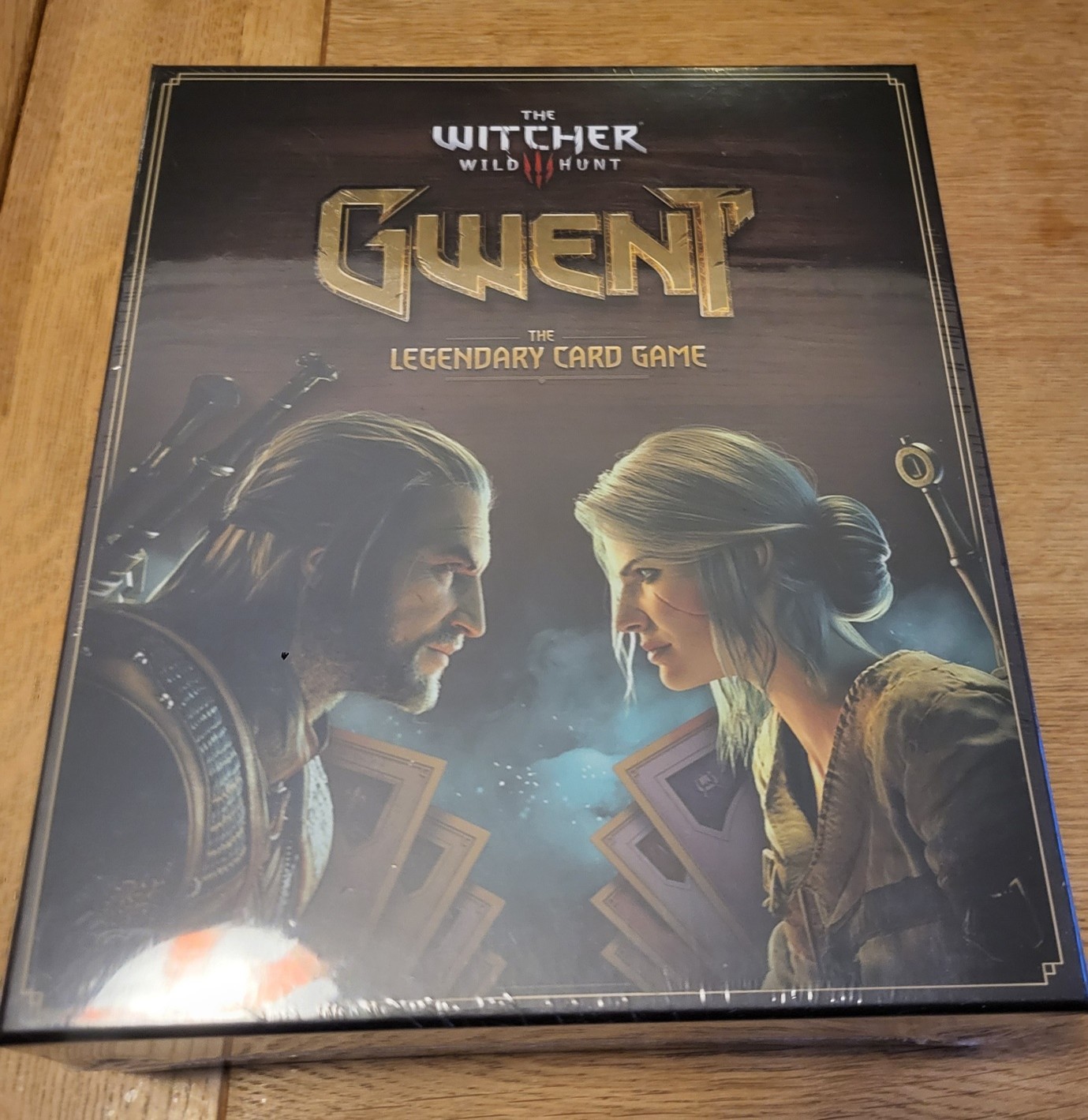
This game is gweat… I mean, great. I mean knock your socks off great. In an era of good games, things have to shine. And whether or not you are a fan of the novels, the TV show or Projekt Red’s games, this is a seriously impressive card game. For context: I love the books (before it was cool!), and the lesser spawn is a gamer though not necessarily a big fan of Witcher 3: The Wild Hunt which is where Gwent most notably appears.
Mechanics are gleefully simple. You have a deck of around 30 cards. You draw 10. Over 3 rounds, you play cards across 3 zones – melee, ranged and siege – and the highest total strength wins. Do you rush for the win across 2, or bide your time and scheme to victory?
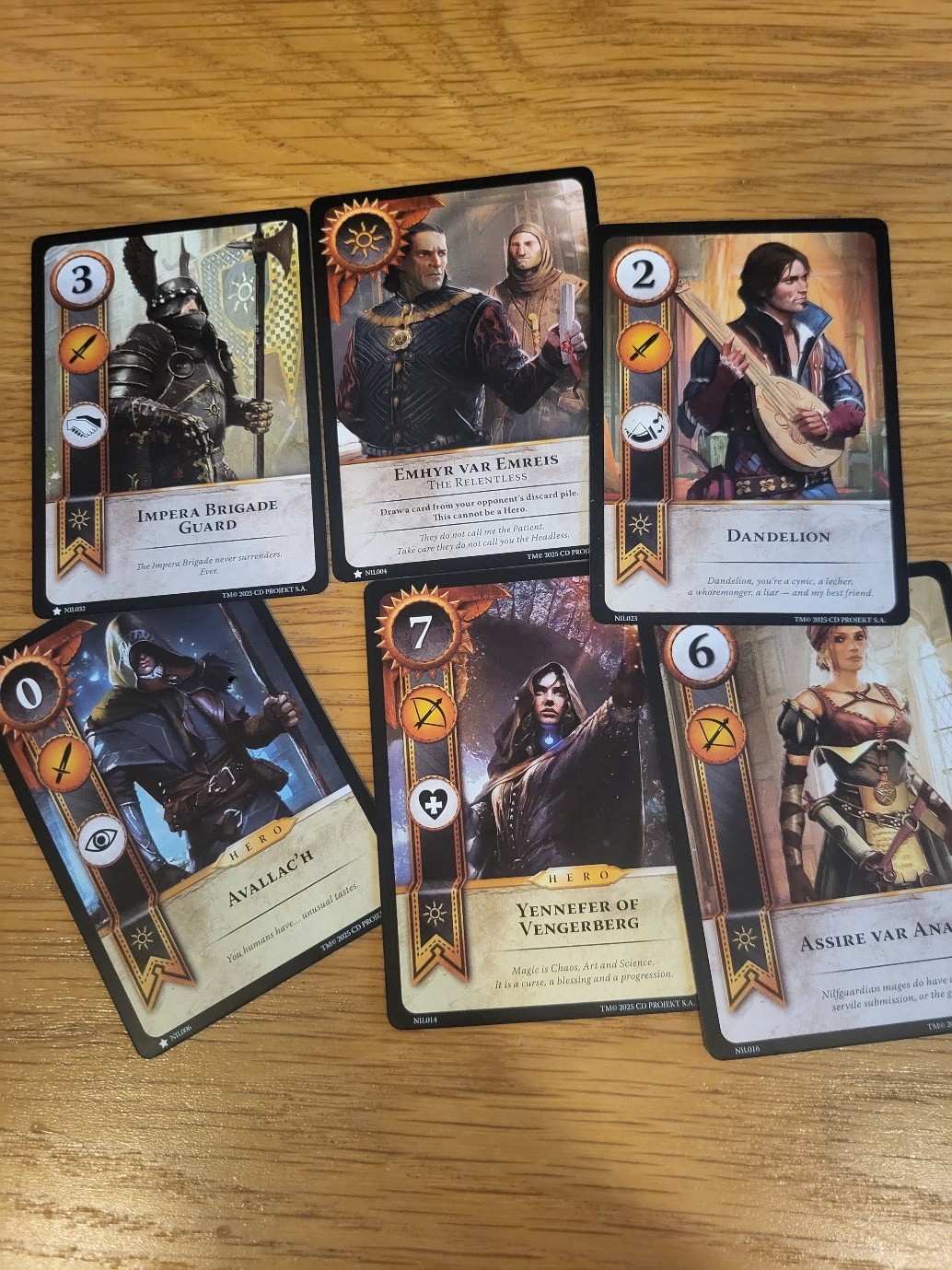
The box comes with 5 different faction decks, each with a prebuilt deck and a full set of extra cards to customise if you wish – very like an LCG (I see what they did there). The factions will be familiar to fans – the Northern Realms, Nilfgaard, Scoia’tael, Monsters, and Skellige – but are really easy to distinguish quickly. Notice that this is not identical to Gwent in the game whilst leaves room for further expansions.
Each deck plays very differently – the Skellige, for example, have a side deck of killer berserkers to dominate melee, Nilfgaard are all-rounders, Scoia’tael focus on dominating the central ranged area, Northerners siege, and Monsters are swarm – and the (glorious) art features everything from iconic characters such as Geralt and Ciri to Dandelion (Jaskier) and killer cows (moooooooooo!).
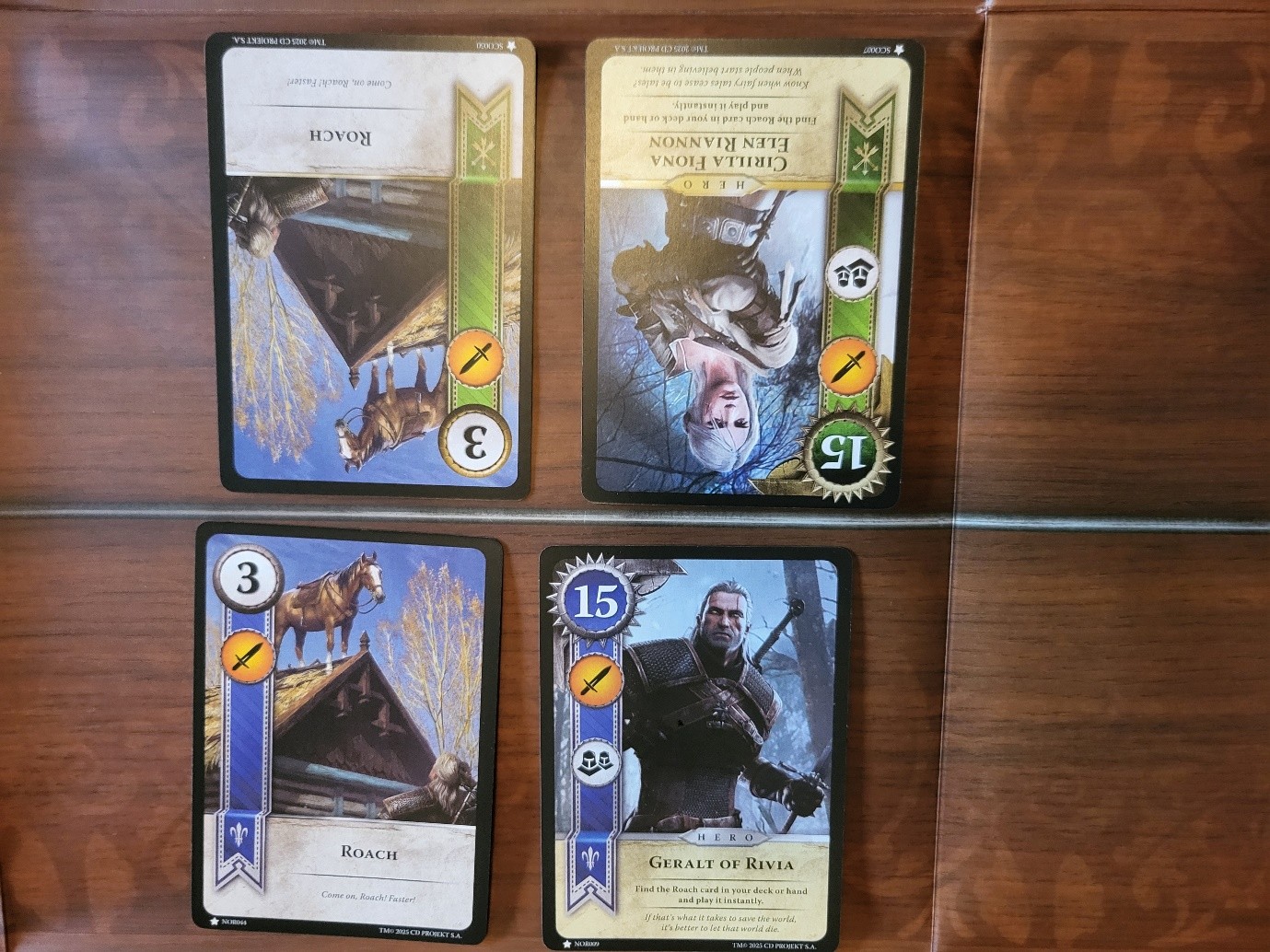
The rules are clear and well laid-out and the player aids great – though could just as easily be printed on the board. The game has a range of play variants, including multiplayer, a cracking solo that uses a full deck of cards (great for learning all the Interactions) and a competitive mode using 3 decks each. Gripes? Well, I’m nitpicking, but I would like a solid board rather than paper. Also, Spies are VERY powerful – most decks have 2 but drawing them absolutely wrecks your opponent. Nevertheless, this is a really solid game, fast, easy to learn but properly tricky to master. An absolute xmas cracker!
Game for the Grandparents
Asterix & Co (RRP £19.99)
Now, I grew up on the Asterix books: between them and Tintin, that was my introduction to the world of graphic novels. Happily, this has now inspired a fast, fun card game that’s brimming with the original art of Uderzo and the chaotic humour of Gosciny. How many games have hitting your opponent in the face with fish as an integral mechanic? Not enough, frankly.

Each player (2-4) gets a mix of 5 cards to begin with, from Gauls (Blue), Romans (Red) and Neutrals (Purple fronts but can have either back, and can play anywhere). Characters have strengths ranging 1-6, and are played at the corresponding red or blue side of the Album (graphic novel) in the middle of the table. When a player has 15 strength on either of their sides, they win the Album along with coins for Romans used (Gauls, meanwhile, tend to trigger special abilities), and when a player reaches a total of 50 across their albums and coins, they win!
As well as characters having abilities, each player begins with one of each of a magic potion, fish and wild boar: potions protect characters from being KO’d (turned face down and strength not counting), fish KO characters (told you they were integral) and wild boar recovers you from KO. It’s a solid, lightweight game with straightforward mechanics, clear player aids and decent over-sized cards, making this an ideal card game for families who want something more than a party game or move on from the My First / Kiddie versions of other games but aren’t quite ready for anything too weighty.

A word of warning: the game can feel a bit gotcha (in other words, it’s a little bit mean) to younger players and it can feel a bit dependent on specific characters coming up, particularly at lower player counts. That being said, it is still a lot of fun.
Game for Competitive Mates
Leaders (RRP £24.99)
I originally was going to say that this is the best game for couples, but I strongly suspect that it would result in divorce. Leaders is magnificently vicious, with echoes of Chequers, Hnefatafl and other classic capture strategy games. The game uses drafting to assemble an asymmetric team of 5 pieces each (usually) over successive turns in an attempt to capture your opponent’s Leader.

As all such things should be, it is incredibly simple at its core. Your leader, or any/all pieces, can simply move 1 space, and you aim to either position 2 of your pieces adjacent to your opponent’s leader (capturing them), or surrounding your opponent’s leader somewhere on the board, typically on the board edge, with a mix of your and your opponent’s pieces (this prevents “castling up”).
The real challenge comes from the draft. There are 13 unique followers to draft, with 3 available at the start of the game: the first player chooses 1, but the second chooses 2; from then onwards, players alternate until you have a full force of 5. Each follower has a different unique ability, some active (needing to be used in place of their standard move) or passive (always on). Some have different movement rules: for example, the Royal Guard can effectively move two, 1 towards your Leader and 1 extra, whilst the Acrobat can move anywhere in a direct line, avoiding intervening models. Passive abilities can include the Assassin taking out your opponent’s leader by themselves if they can get adjacent, whilst the Vizier grants extra movement to your Leader. As such, there’s a wealth of possibilities and permutations as you draft not only what you might want but what you want to prevent your opponent from having. With clear reference cards and intuitive abilities, paralysis of choice is at a minimum.
It’s also worth noting that it is gorgeous product all round, from the wooden discs and heavy cardstock to the box having a drawer used for placing the character standees in. A first-rate piece of game design wrapped up in a very lovely package.
Game for friendly rivals – Architects of Amytis (RRP: £20)
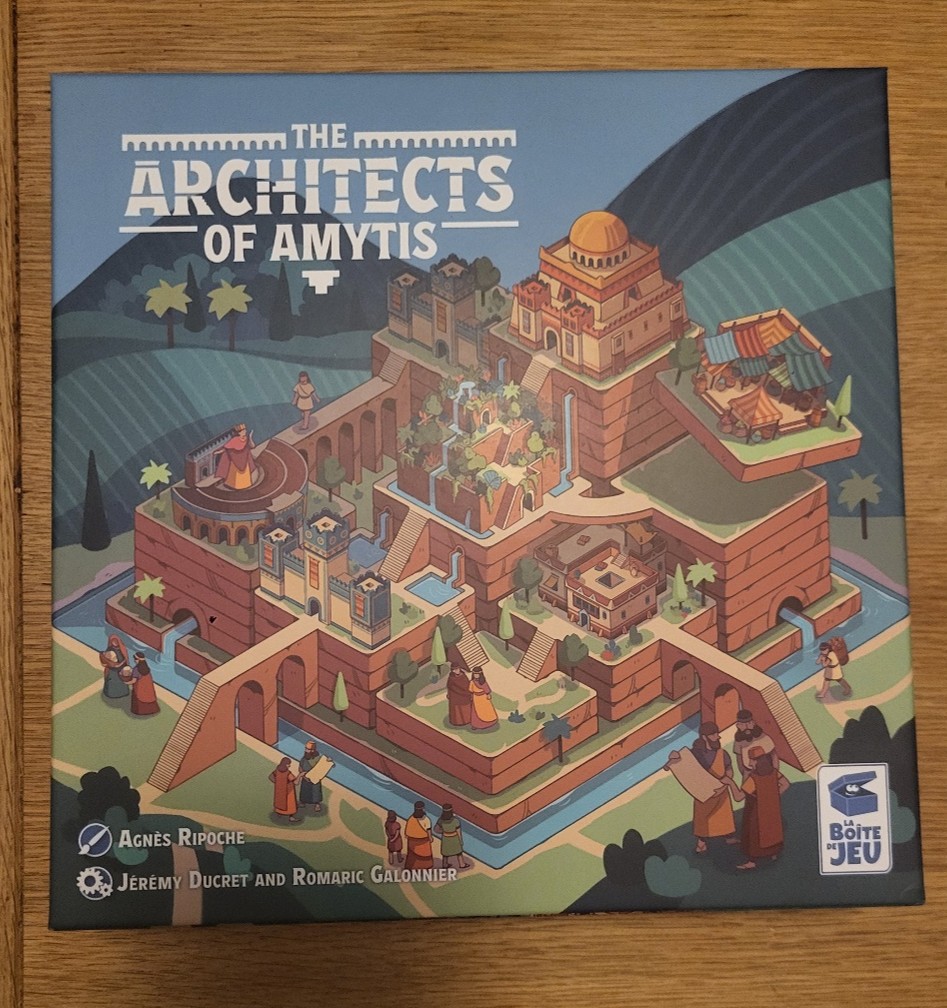
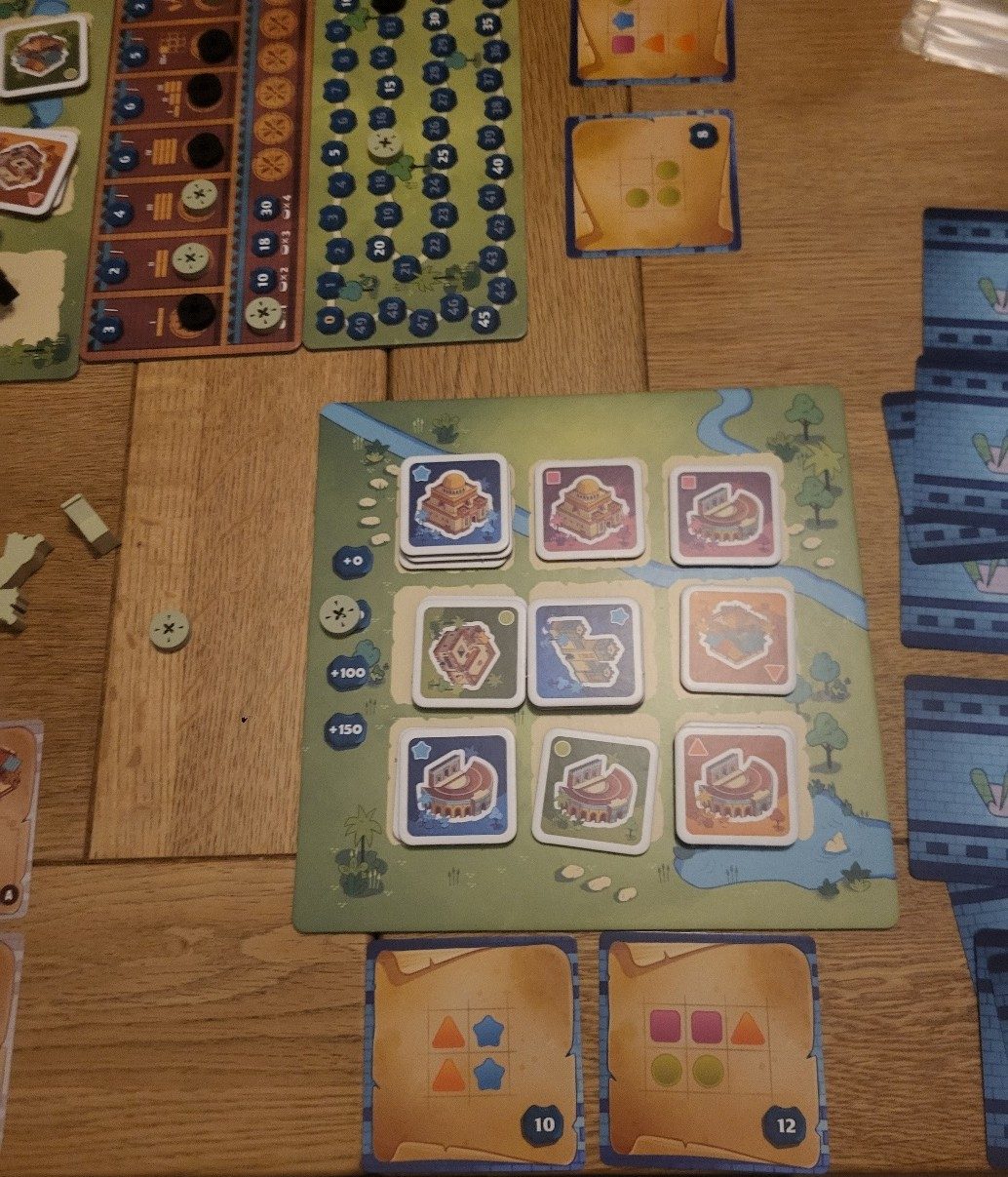
This really has been the year of the Duel, hasn’t it? Well, given that a lot of my game time is against one or other of my children, that suits me just fine. And Architects of Amytis absolutely hits the spot if you want something that’s a bit lighter, faster and self-contained whilst still having familiar elements of worker placement and tile-laying strategies. Claiming tiles allows you to build your 3×3 city board, with different buildings triggering different instant scores (I particularly love that Hanging Gardens score based on stack height)
It has a charming tic-tac-toe mechanic whereby you place one of your 4 workers on a separate 3×3 grid of the tiles, to claim them to build your city; 3 in a row gives you access to end game scoring bonuses (typically for the height of your stacks), so there’s some surprisingly tactical decisions to be made over whether to take a tile or to block your opponent’s rows. This gives the game a keen push-pull that is tense but rapid, as your city grows in three dimensions. It’s a very accessible game, with clear iconography that means it’s ideal for all ages – but equally, properly nasty for experienced gamers.
Game for solo or the whole group – The Hanging Gardens (RRP £24.99)
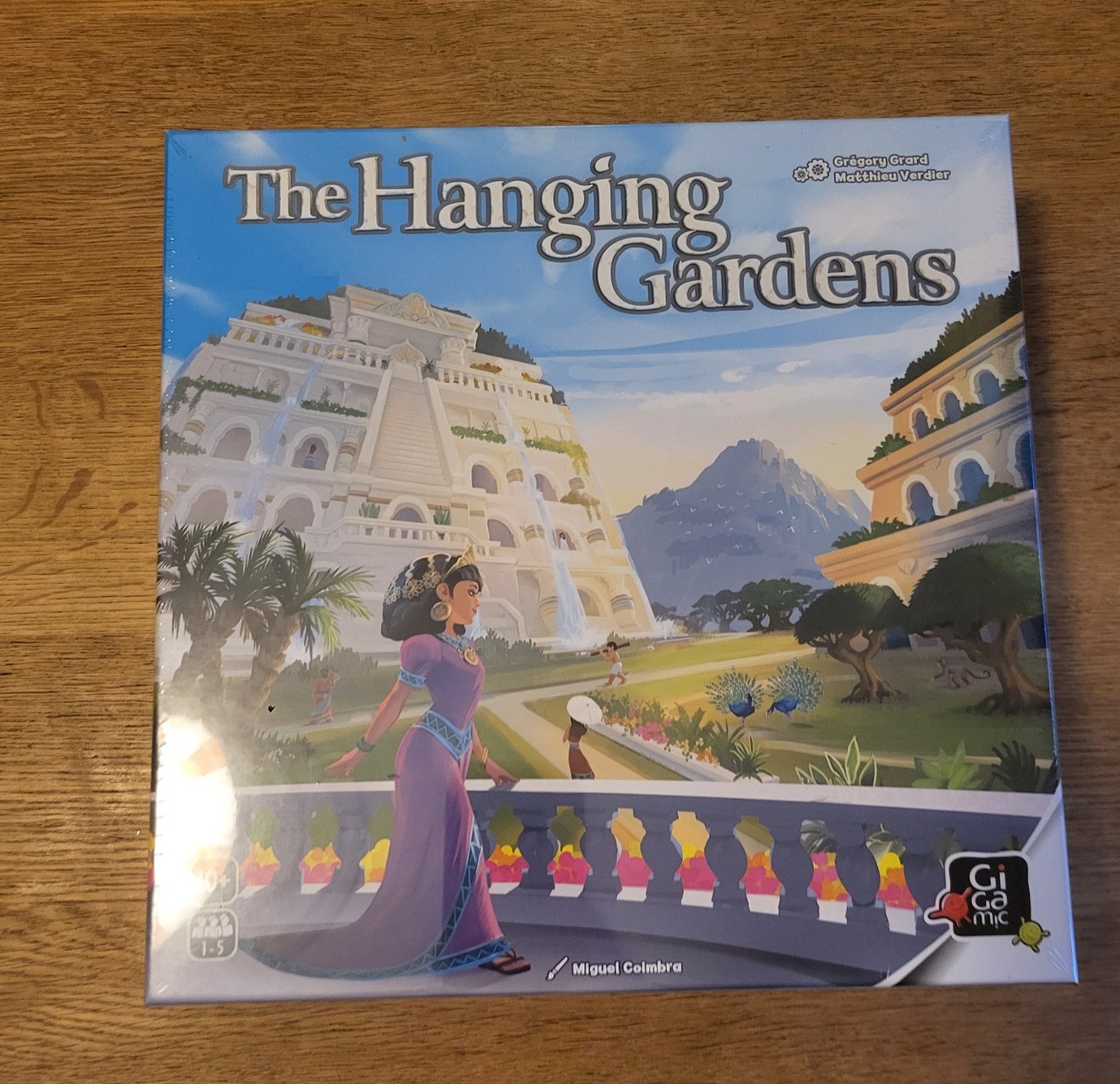
It’s also quite the year for garden-themed games, at that. And here we have another game of ancient Babylon (maybe I should have themed it as a Game for Classicists?), an absolutely stunning tile-laying treat for 1-5 players. Despite being very accessible (it’s rated 10+) and quick (playable in 30 minutes) it’s got plenty of strategy as well as the component quality you’d expect from Gigamic; despite being nothing like it in terms of gameplay, it reminds me a bit of another of their games of the ancient world, Akropolis – again, quick, strategic, attractive and accessible. Despite seemingly being identical in theme to Architects of Amytis, it’s a very different game (and if I am being ruthless, I prefer it).
Oh, but this is a clever little game. You know when a game combines lots of familiar elements, it runs the risk of feeling dilute and not quite any of them? That’s NOT this. Familiar mechanics are combined here to superb effect for rapid, ruthless result. It’s a delightful puzzler, placing workers to select tiles to build your hanging garden, chaining flower colours, managing your menagerie and inviting visitors.
Here, you construct layers and levels of gardens (maybe it’s the stacking that reminds me of Akropolis, come to think of it), managing your resources to ensure the most attractive overall appearance and best use of rare flora to maximise points – so, endgame strategies are pretty clear from the outset.
I love when a game is demanding but FAST. One of the best elements is that first player status switches constantly and that in turn unlocks cheaper objectives, but then you are missing out on extra resources in the form of gold or tools, so there’s a constant juggle of optimising bonuses – but because the worker slots are limited, there’s no real risk of action paralysis and means that not only is downtime non-existent it’s surprisingly interactive. The suggested time is 30, but at 2 player it’s doable in half that. Also, a shoutout to the excellent solo mode which truly feels like you’re competing with another human player! With great table presence and fab component quality, this is genuinely one of the best board games I’ve played this year.
GIVEAWAY TIME

To win EVERTHING you see above, simply head over to our Socials @big_geekingout and @bigcomicpage for details of how to enter. But before you do that, you can earn yourself five bonus entries by commenting below and letting us know which game you like the look of most. We’ll announce the winner in the new year with ANOTHER giveaway! Massive thanks again to our lovely chums at Hachette!
The Writer of this piece was: Sam Graven
Article Archive: Geeking Out
You can follow Sam on Instagram at @big_geekingout


 BIG COMIC PAGE
Leave a Reply