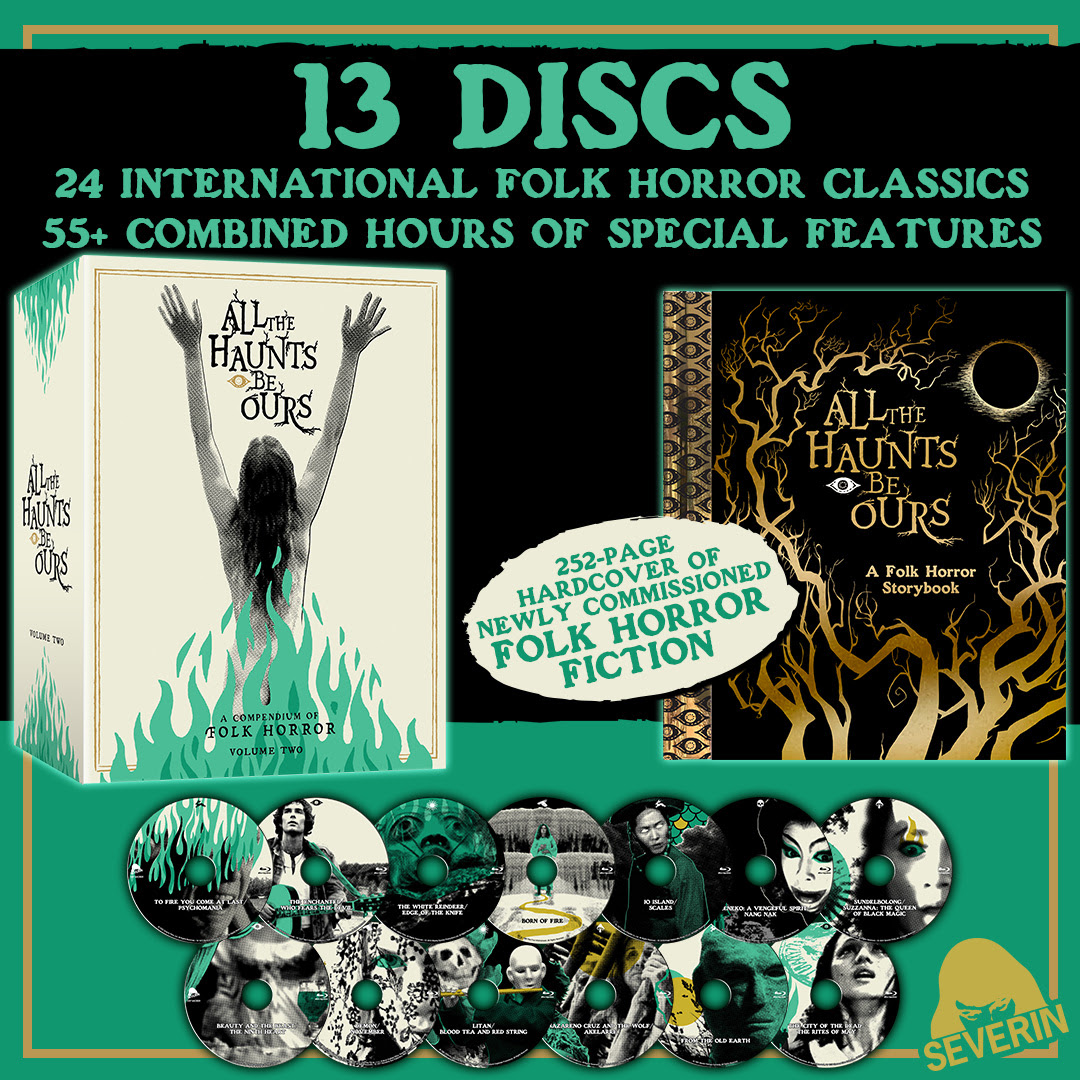
Severin Films’ follow-up to the most successful box set in the company’s history All the Haunts be Ours: A Compendium of Folk Horror Volume 2 is out now and will be on sale this Black Friday, and we were fortunate enough to have a chance to chat with curator/producer Kier-La Janisse about folk horror and the process of putting the collection together.
Big Comic Page: How would you define folk horror?
Kier-La Janisse: In the most basic terms, it’s horror that has something to do with folk customs, practices, or beliefs. Specifically, some sort of cultural clash that happens between different belief systems.
If you want to go more specific than that I would say through the course of making my documentary Woodlands Dark and Days Bewitched,it became apparent that there were two types of folk horror that were dominant.
The Anglocentric version of folk horror which is very much focused on the story type where you have a village, or rural or isolated community and a stranger comes into the community and discovers it to be full of weird customs that are a danger to him or her. It’s when the folk themselves are a source of threat or danger to the protagonist.
In other parts of the world less dominated by English culture, what you’ll see is folk horror related to folklore – creatures and tales. So often the belief system that the people have is a belief shared by the protagonist of the story and their beliefs are things that fortify them against the danger that comes from outside of their isolated community.
So, it’s hard to describe it as one thing because I interviewed 50 different people for my movie, and they all seem to be split in kind of how they would define it. I’ve tried in my work not to define it for people.
Folk horror has the word folk in there and what that implies is folk tales are constantly evolving, mutating, and changing based on how culture and word of mouth evolves so to me thinking there was this fluid interpretation of what folk horror is almost kind reflected that the word folk is even in there.
BCP: How did you discover the folk horror genre?
KLJ: The earliest ones I would have seen would have been made for TV stuff like The Dark Secret of Harvest Home with Bette Davis which is a miniseries that was on in the late 70s. In the early 80s it was Children of the Corn. That was a big one for me; I saw that one in the theater and I loved that film. When I was a teenager, it was The Wicker Man.
I was obsessed with The Wicker Man as a teenager, and I was convinced that the summer isle that they lived on was a real place. When I was in my 20s, I went to the town they arrived at the beginning of The Wicker Man, and it was an extremely long journey to get there and I went by myself. It was the first film location I made a long pilgrimage to go and visit. Since that time, my main thing that I do on holidays is visit film locations, and it really started with The Wicker Man because I was such a huge fan of that film.
BCP: Was there a movie that felt like a no brainer to put into either collection? Like we need to have this movie.
KLJ: Eyes of Fires on the first box set was definitely something that we really needed to try to get because it had never been released on anything except VHS. Other companies have tried to find the director (Avery Crounse). He didn’t make that many films, and he kind of just disappeared. Nobody could find him, and all kinds of boutique labels over the years have tried to find him and license that film. And I think it was just cold calling people in the white pages was how my boss found someone who had been his roommate at some point, and it was a really convoluted way that we were able to find him.
My boss, David Gregory, at Sevrin is really a straight-shooting guy, and he’s such a fan of these films. He’s not some corporate businessperson, so I think he was able to really make an impression on Avery Crounse. Avery almost said yes instantly and had access to the negatives to make a new restoration so everything kind of fell together perfectly for that movie. To us, that was really the gem of the first box, because fans had been clamoring for that movie for a long time and wondering, why isn’t this movie released anywhere. So that was a really big one to get for the first box set.
And the second box set really started with a film that we were really trying to get for the first box set that we just weren’t able to get in time. It was a Filipino film by a director named Mike De Leon called Itimin the Philippines, or the English title is The Rites of May.
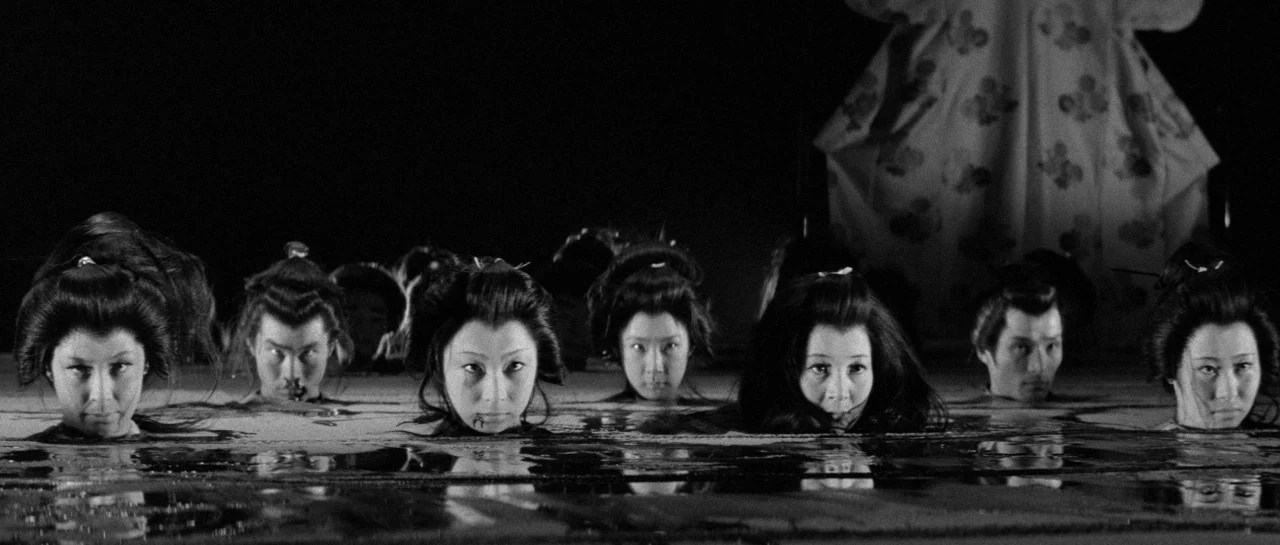
That film really kicked off the idea to do a second box set, and so we started to ask are there other films that we didn’t get the first time around that maybe we could keep looking into that could constitute a second box. And of course, the second box ended up being bigger than the first box, so it wasn’t a matter of finding a few extra titles. There was actually a wealth of other films that we wanted to include. I mean we could probably make six more box sets but I think the two is going to be it for me. The first box set just kind of turned over immediately into the second box set.
The Rites of May is on the last disc even though it was the first movie that we were going after for the second box set. It was still the last movie that we got signed. That’s how long it took us to get the rights to that movie it was like four years. So, it ended up being on the last disc paired with City of the Dead. Most of the discs, the two movies go together really well but not that disc. They were like the last movies to get approved, so they ended up being oddly paired on the last disc but that’s okay.
BCP: We’re sad to hear that you’d cap it at two box sets, but could you tell us a bit about some of the movies you wanted in the collection that didn’t make it for various reasons.
KLJ: I think the only things that we weren’t able to get that we really wanted was stuff where we couldn’t find the materials like the film elements. Even if you track down the rights holder for the film and they’re interested in working with you – that’s a long process in of itself – even then they might not have access to the negatives of their film anymore or 35mm film prints that are in really good condition. When you do a new restoration of a film you need certain film elements to work from and kind of the worst element you could work from is the film print. If they have an existing film print that’s in good condition, then yes technically you can do the restoration, but it’s nowhere near the quality of the negatives or the internegatives or interpositives there’s all sorts of levels that the film goes through, and one is better than the other one in terms of using it for your actual source material.
There was a film called Hex that I really wanted to get which had Cristina Raines, Gary Busey, and Keith Carradine. It was this early 20th century rural farmland and these bikers show up but they’re on these early examples of motorcycles they’re like 1920s motorcycles. They come into this rural area where two sisters are living alone on a farm. That film has a lot of cool folk horror elements to it.
We were trying to get that movie which also had only ever been on VHS. I think we found the rights holder, but they didn’t have any of the materials. David Gregory the owner of Severn was the one who dealt a lot with the rights holders of the films, so he would have been the one encountering whatever the problems were.
So, I hope that somebody releases it even if it’s not us. I hope those materials get found and someone can release that movie. Often, it’s perseverance and sometimes you can get pulled away to work on another project and then meanwhile another label will continue to persevere in looking for that title, and so they’ll end up being the ones that get it because they tried harder.
Other than including something like The Wicker Manwhich is something I think people expect us to have or Blood on Satan’s Clawbecause those are considered the primary British films that a lot of folk horror movies came out of. But those films are already released by other companies, and we did have Blood on Satan’s Claw briefly. We had a very brief window where we were allowed to have it for Black Friday in a very limited edition but then another rights holder got it. I do think considering our mandate was to mostly look for obscure films that we got a lot of what we went after.
BCP: Do you have any new folk horror recommendations?
KLJ: Yeah! Since doing the box set there was a documentary call The Last Sacrifice and it’s directed by Rupert Russell who is actually the son of Ken Russell who is one of the greatest film makers who ever lived. He made Crimes of Passion, Lisztomania, Women in Love and all kinds of stuff but anyways his son made this documentary called The Last Sacrifice which premiered at the Brooklyn Horror Film Festival 2024.
It’s a documentary about folk horror but it’s looking at a particular murder case in the UK. So, it’s kind of a folk horror documentary, a true crime documentary, and an occult documentary all in one. It’s fantastic! It’s beautifully directed and edited. It’s just been doing festival rounds so it’s not yet streaming but it definitely one to keep an eye out for. I loved it! There’s a little bit of crossover with my documentary but only really enough to let people know that you’re in familiar terrain and then it goes off into these specific case studies that really make it unique and fascinating.
I also really liked Enys Men which I know people were divided on. It’s a 16mm film of a woman alone on an island and having a folk horror experience connected to a mining accident from the past. Obviously, it’s a very low budget film but it’s one that I felt was a very strong film.
The Severed Sun premiered at Fantastic Fest 2024. And the filmmaker, Dean Puckett, made a short film called The Sermon, which is on our first box set. The feature film The Severed Sun, actually utilizes some of the ideas that were in The Sermon but it’s much more expanded and that was a great folk horror film.
There have been these waves when folk horror becomes popular, and I feel like it was already popular which is why I made my documentary. But even since the documentary, there’s been a whole bunch of people who heard of the genre because of the documentary. Now those people are making folk horror films, so now we’re getting a whole new wave of folk horror. But it’s seeing how people interpret sort of the tropes of folk horror and how they subvert those tropes that’s fascinating to watch and also the arguments between people about what is folk horror and what counts and what doesn’t count. All these arguments are fascinating to watch because genre definition is so fluid, and they’re so dependent on audience reception and what the audience thinks is folk horror or even just horror affects a lot of what gets categorized as horror.
BCP: Let’s talk about To Fire You Come at Last. How was the project pitched?
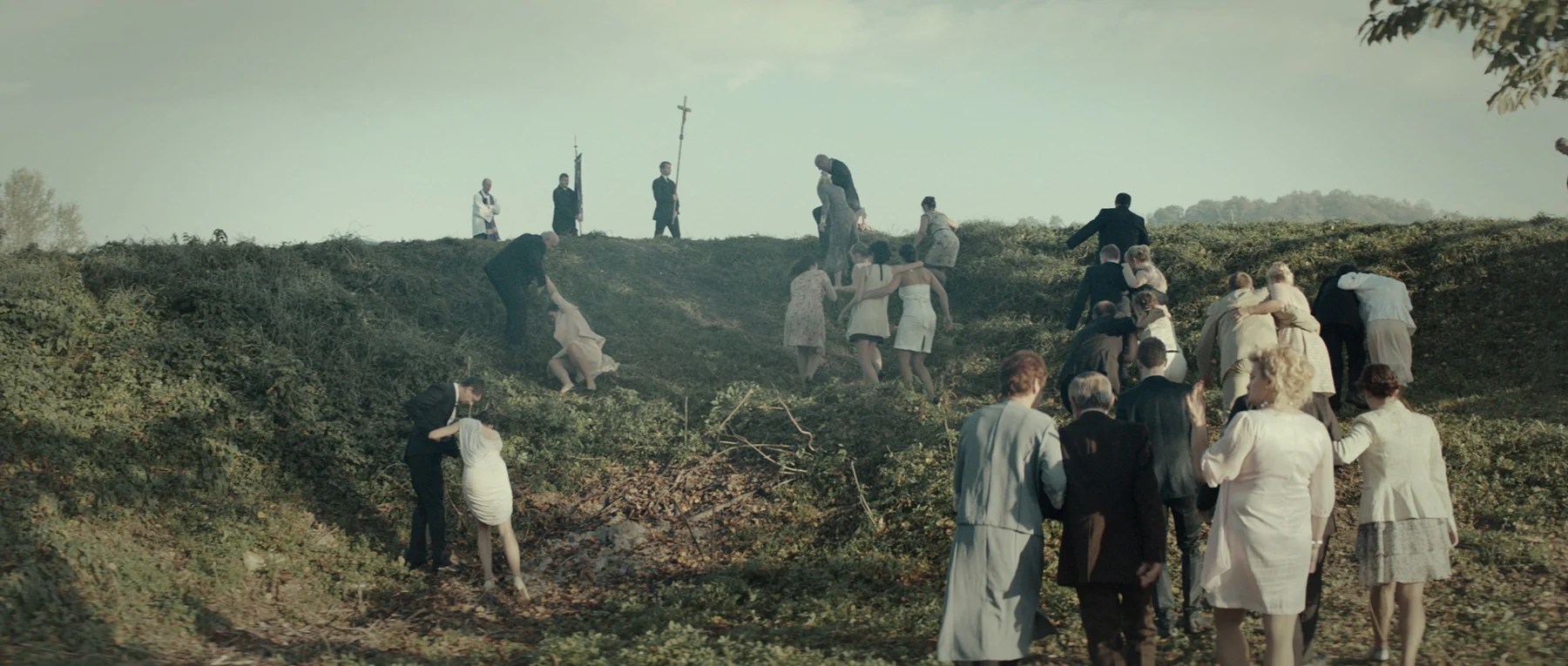
KLJ: How it worked was I actually pitched director/writer Sean Hogan on it. I asked him if he could make a short film that had something to do with a real folk tradition and I wanted it to be focused more on the minutia and the practicality of that tradition more than the spectacle. I gave him several examples of what I meant, and the corpse road was the thing he seized on because he was already doing research on corpse roads for another project. So how we worked it out with him was he would send me a script and I would have script approval and once I approved it, he was then free to make whatever movie he wanted.
So, once he’s making and editing the film we were not going to interfere with what he was doing because the whole point was that we chose him to do it because we like his work. So, we’re not going to mettle in it. We wanted script approval so that we would kind of know what to expect from the story and the dialogue. But I don’t even think I had to give any feedback or much feedback. I loved the script he sent me. My credit is more of an executive producer credit, so I was not a producer that was on set or organizing any of the practicalities of the film shoot those producers were Everim Ersoy, Nick Harwood, Jim Hinson, and Paul Goodwin. There was a whole team a company called Deviant Films in the UK who were doing the nitty gritty of producing for that film.
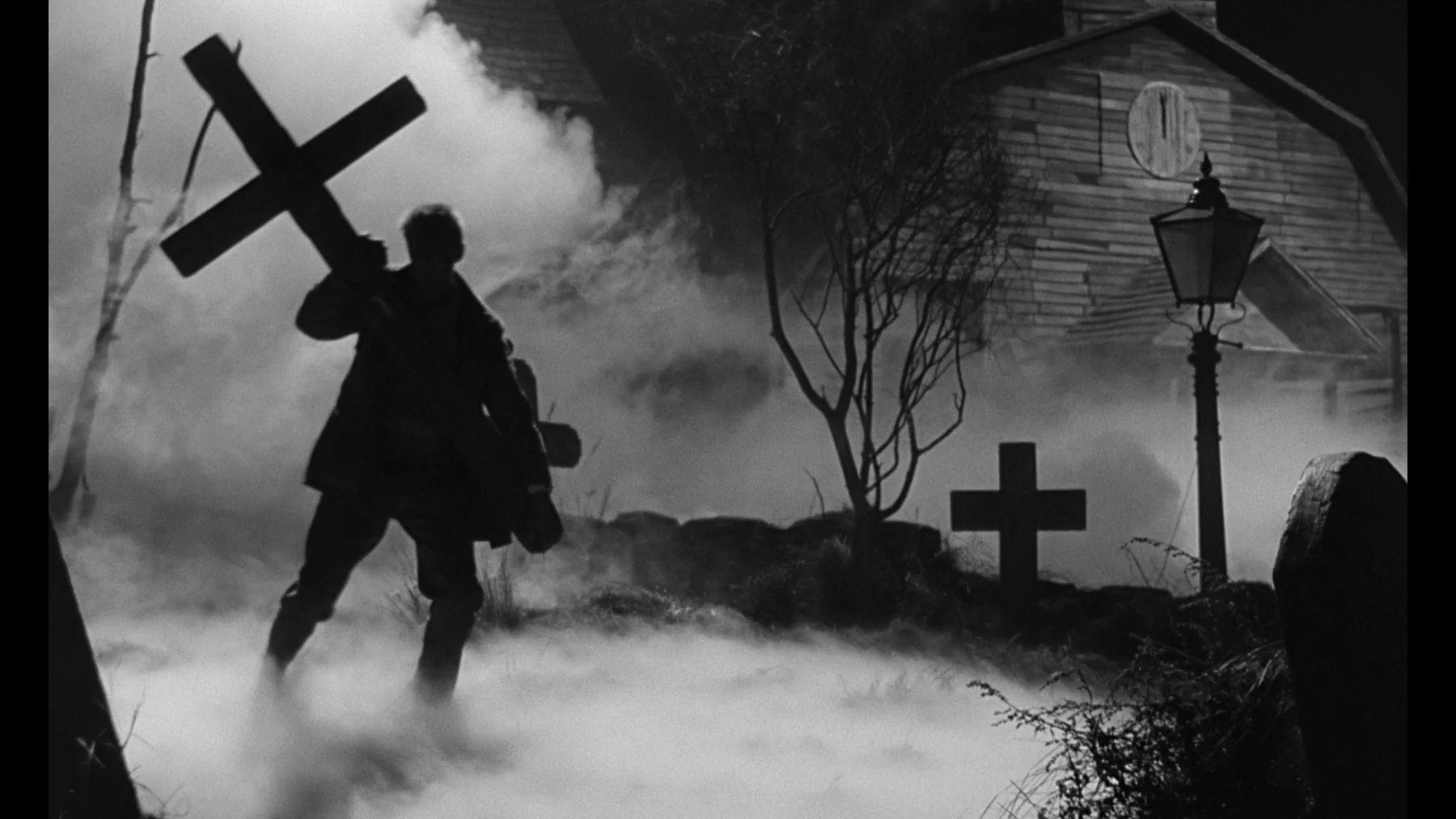
And I don’t know if they mention it directly but the journey the people are on. They’re on a journey to bring a corpse to consecrated ground. The road they’re walking around is known as corpse road or corpse path and that’s the folk custom in that movie. There use to be all over the UK in rural environments that didn’t have their own consecrated cemetery they would have these corpse roads that were specifically for corpse parties to take their dead sometime over a four day walk and sometimes it was quite a distance that they’d have to walk to get the body to a church. And that’s actually the folk custom in that movie is just the very practice of having to carry a coffin over a road like that.

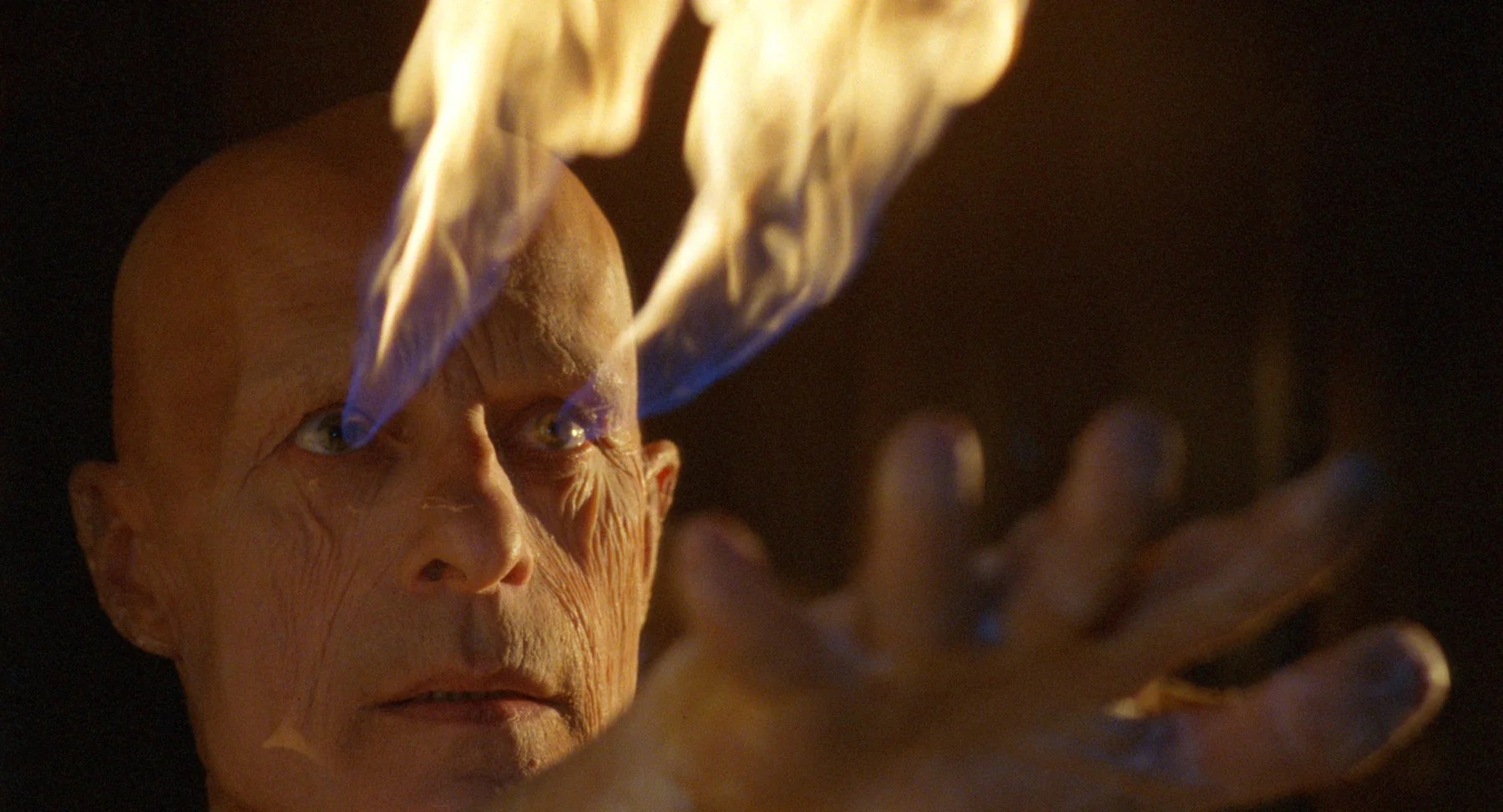
The Haunted Season is an anthology series that will premiere on December 1 on Shudder with To Fire You Come at Last.
When we pitched Sean on the idea of doing this film, we’d have it in our box set but the bigger goal was I wanted to use it to pitch Shudder on letting us produce a series of annual ghost stories for the winter season/Christmas holiday season similar to how the BBC has their A Ghost Story for Christmas series. So, we pitched Shudder with the idea that Sean’s film would be the first episode or the first year’s film and each year we’d commission another film in a similar process and make a new film every year that would premiere on shudder for Christmas, so they just approved it and we just announce the series yesterday.
Sean is very good with casting. He worked with James Swantson on a stage play and started recommending him to other film makers. So Swantson is very well known as a creature performer. He does monsters in all kinds of film and television now and that has a lot to do with Sean Hogan.
Both Volumes of All The Haunts Be Ours: A compendium of Folk Horror Volumes 1 & 2 are available now (CLICK HERE) and will be part of Severin Film’s Black Friday sale that runs from 11/29 through 12/03. And The Haunted Season is an anthology series that will premiere on December 1 on Shudder with To Fire You Come at Last.
The writer of this piece is: Laurence Almalvez
Laurence tweets from @IL1511
![‘All the Haunts Be Ours’ Vol 2 Blu-Ray collection is the perfect springboard in the world of Folk Horror [REVIEW] – BIG COMIC PAGE Avatar](https://bigcomicpage.com/wp-content/uploads/2017/04/cropped-img_1411.jpg?w=48)
 BIG COMIC PAGE
Leave a reply to ‘All the Haunts Be Ours’ Vol 2 Blu-Ray collection is the perfect springboard in the world of Folk Horror [REVIEW] – BIG COMIC PAGE Cancel reply