FIRE TOWER
- 2-4 Players
- Recommended Age: 10+
- Time: 15-30 minutes
- RRP: £37.99 (though you can get it significantly cheaper from the fine folks at Zatu Games)
OVERVIEW
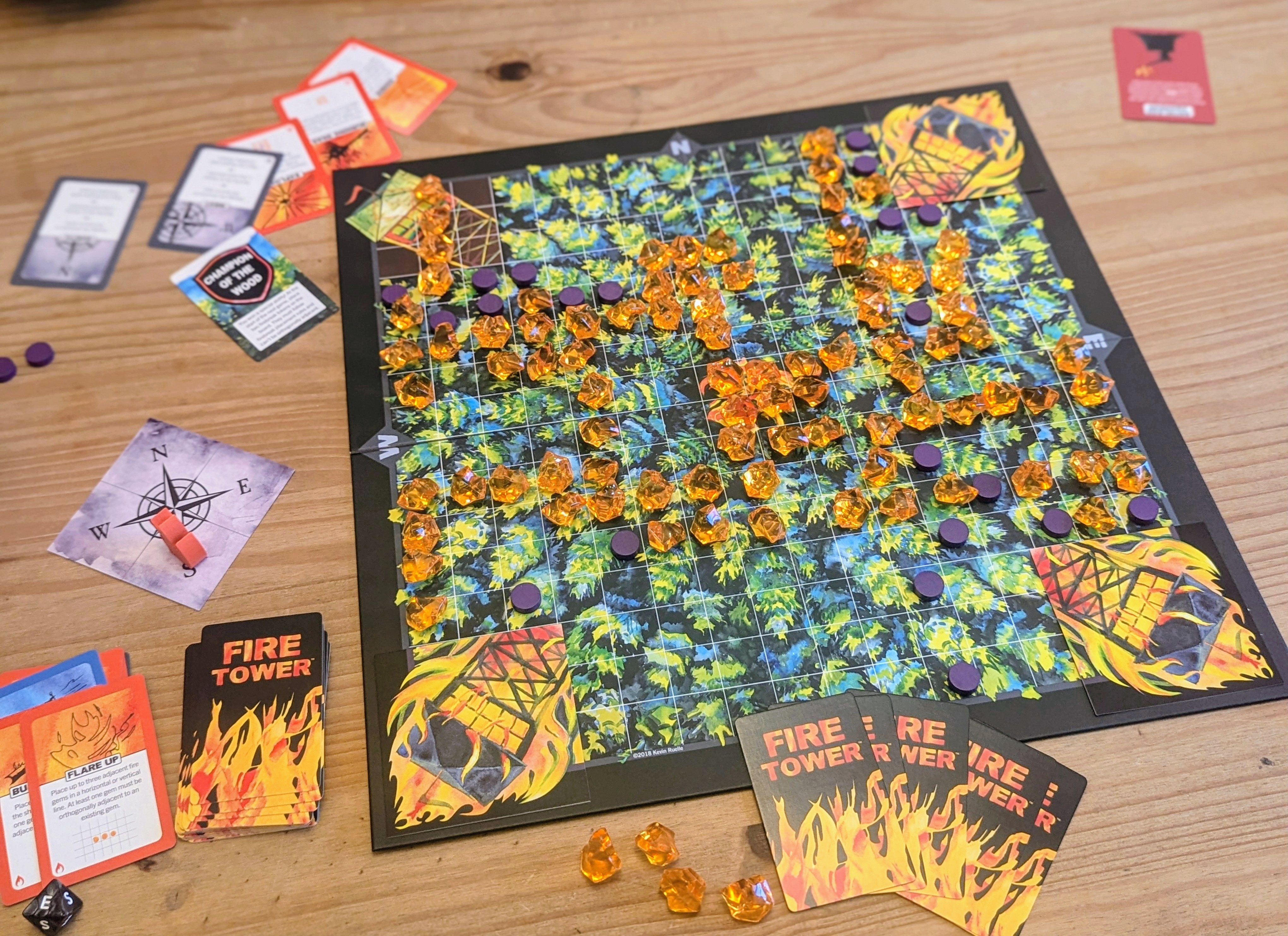
In Fire Tower from Runaway Parade Games, your goal is to burn down your opponent’s tower by spreading flames from the central blaze using wind, flare‑ups, and explosions, all while simultaneously defending your own tower with water, wind, and firebreaks.
WHAT’S IN THE BOX?
The box contains the following:
- Quad-Fold Board
- 135 Fire Gems in a printed Cloth Bag
- 24 Purple Wooden Firebreak Tokens
- Custom Marbleized Eight-Sided Wind Die
- Weather Vane Card
- 1 Custom Wooden Weather Vane Meeple
- 52 Action Cards
- 4 Bucket Cards
- Firestorm Card
- Mutual Aid Card
- Champion of the Wood Card
- Shadow of the Wood Card
- 3 Tower Ablaze/Forest Cards
- Rulebook
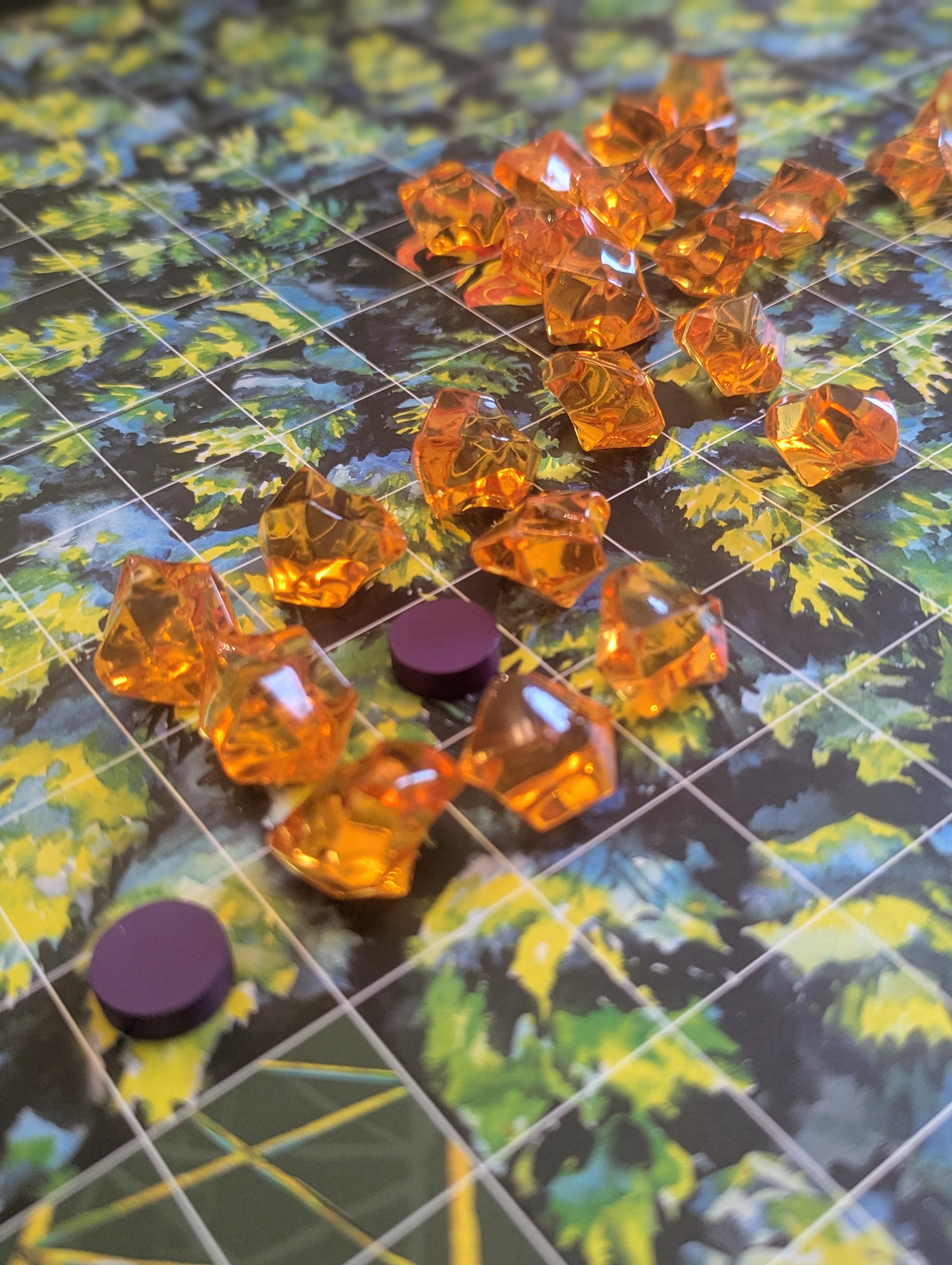
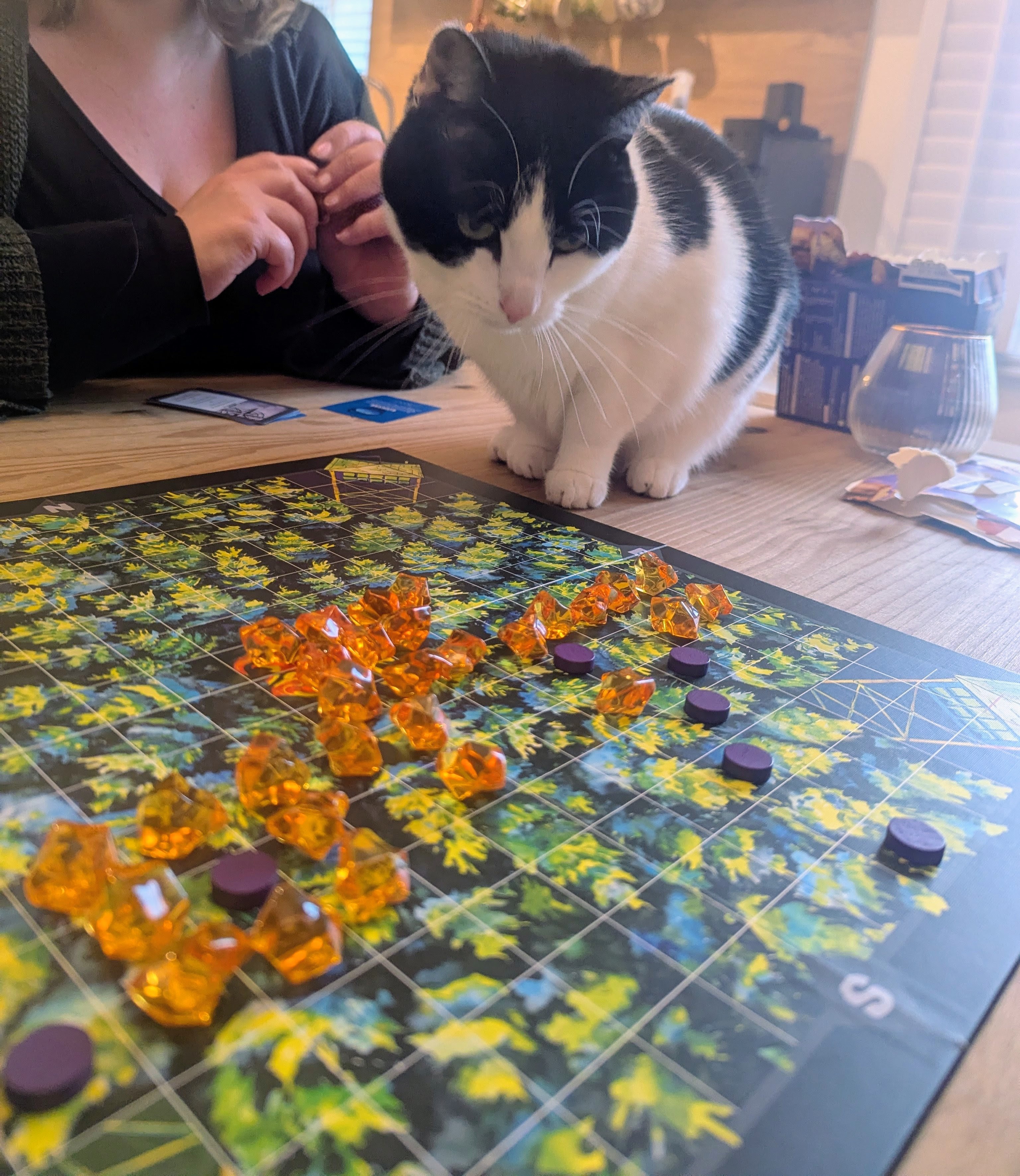
The components are very high quality, particularly the fire gems, which add a fantastic visual flourish to the rapidly spreading flames. The cards are well designed too, featuring visual representations of their effects in a grid format that makes it easy to see exactly how they can be played (three fire gems in a row, two firebreaks with a gap in between, etc.). One comment from our table was that the purple firebreak tokens pale a little in comparison, and the consensus was that something more visually interesting could have been used instead. Overall, though, this is a solid and cleanly designed game that looks great on the table.
HOW TO PLAY
At the start of the game, each player is assigned a fire tower in their own corner of the board and dealt five action cards and one bucket card. A roll of the custom weathervane D8 determines the initial wind direction. Each turn, a player must do two things:
- Add a flame token orthogonally adjacent (i.e., any direction except diagonally) to an existing flame token in the direction the wind is currently blowing.
- Either play a card from their hand or discard as many cards as they like and draw back up to the standard five‑card hand size.
And that’s basically it. Play continues clockwise until only one tower remains unburned.
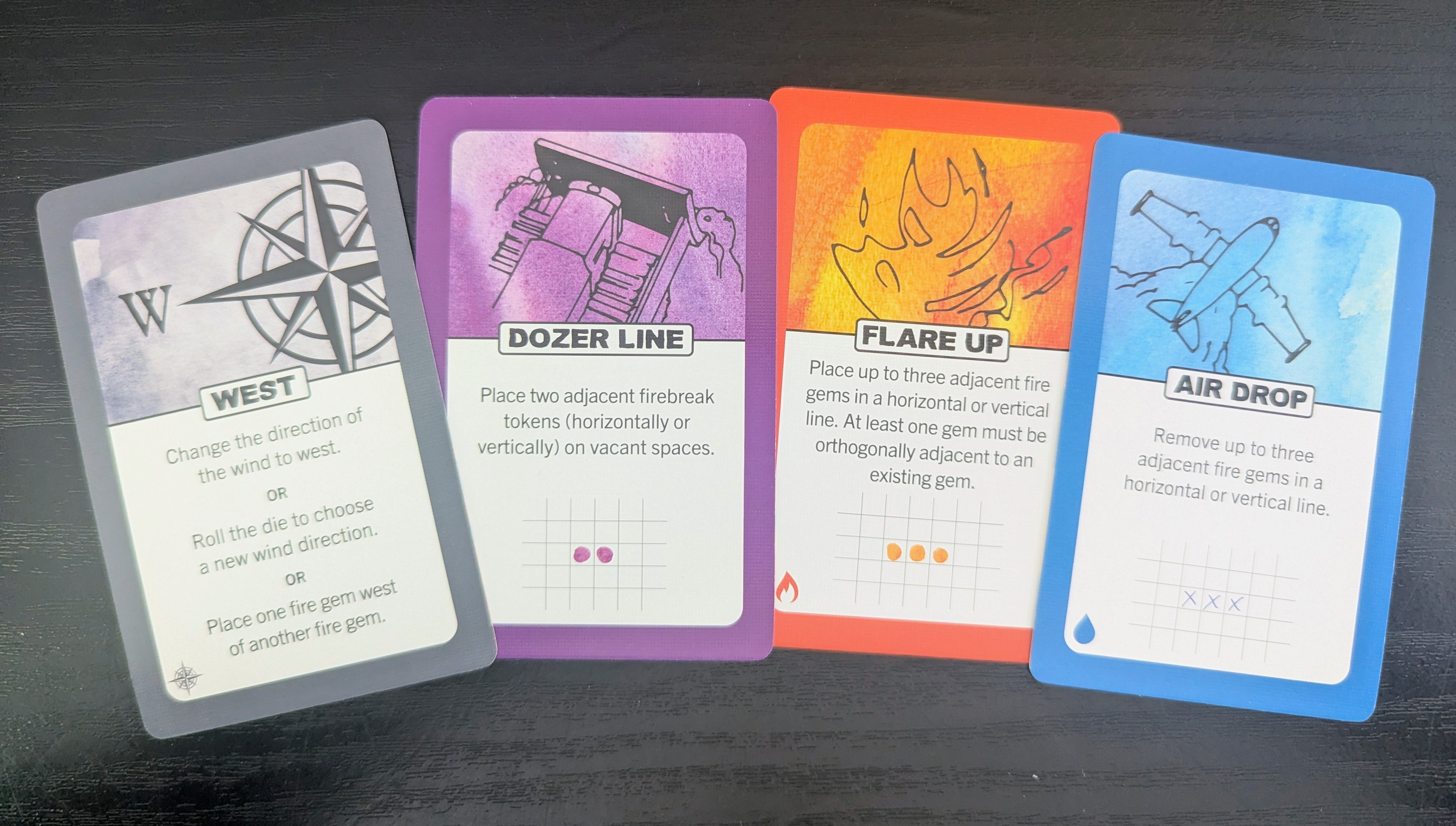
There are four types of card – Wind, Fire, Water, and Firebreak – each offering different tactical possibilities.
Wind Cards (grey) allow you to change the wind direction to the one shown on the card, roll the die for a random new direction, or place a fire gem on one empty orthogonally adjacent space in the direction indicated. Wind direction is a key tactical element, especially with more players, as the fire can close in alarmingly fast if you end up downwind without a way to redirect it.
Fire Cards (orange) do exactly what you’d expect: spread fire. When played, you add fire gems to the board in the shape shown on the card, ensuring they’re orthogonally adjacent to an existing flame.
Water Cards (blue) remove fire gems in the shape shown on the card. Very handy when things get a little too warm.
And finally, Firebreak Cards (purple) let you place the aforementioned firebreak tokens anywhere on the board (other than your own tower area) in the configuration shown. Once placed, no fire gems can be added to those squares. However, they cannot be placed orthogonally adjacent to an existing firebreak token, so that impenetrable wall you were planning isn’t happening.
There are a few other card types as well, including a single Firestorm Card that’s shuffled into the deck and triggers a massive flare‑up when drawn, and a Bucket Card that acts as a one‑shot emergency measure if the flames get too close.
IS IT ANY GOOD?
For context, I’ve played the game with two players and with four players in the 2‑vs‑2 Teams mode. The former is an enjoyable, tactical back‑and‑forth with a steady ebb and flow as you try to break through your opponent’s defences, hoping the wind is at your back and making the most of “big swing” cards like Explosion or Smokejumper that can drastically shift momentum. However, the latter is where the game really heats up. Working with a teammate to wipe out both opponents makes for a thrilling experience, full of near‑misses as the tide of the flames turns again and again. It’s also great to see that Runaway Parade have included a neat mechanic that lets eliminated players continue contributing to the game.
In terms of complexity, Fire Tower sits comfortably in the sweet spot for casual gamers looking for something a little more involved than a traditional party game without drowning in endless rules or fiddly tactical minutiae. That said, the rulebook can be a bit tricky to digest at times, with some dense and occasionally unclear explanations – firebreaks in particular can be confusing, with several cards and situations that seem to contradict the core rules. Still, for the most part, this is an easy game to pick up and play without much prep.
Overall, Fire Tower ticks a lot of boxes. It’s fun, visually striking, and accessible to just about anyone, with tactical depth that feels engaging without ever becoming burdensome. It’s certainly eye‑catching (as you can see below), and it’s guaranteed to ignite your board game night in all the right ways.
The writer of this piece was: Craig Neilson-Adams (aka Ceej)
Article Archive: Ceej Says
You can follow Ceej on Twitter


Leave a Reply