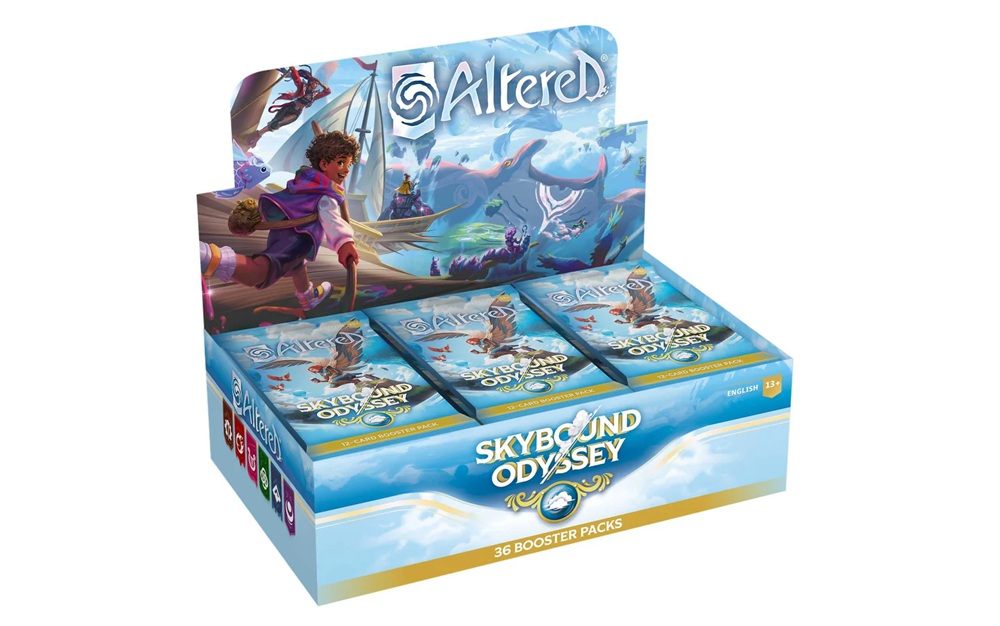
The new set for Altered TCG is a remarkable thing. Whilst not a core set, Skybound Odyssey is sufficiently self-contained that you can just use it as entry point – although it’s fair to say that it adds a new level of complexity to an already demanding, but satisfying card game. Now, I know a lot of people see tcg and immediately switch off – just, don’t. Altered is truly unique, playing much more like a Euro boardgame – or more accurately, several different Euro boardgame styles at once, all combined in a surprisingly coherent whole.
VERY briefly, in Altered each of 6 factions quests along the Tumult, a set of 2 matching expedition paths, with the strongest in each advancing: when your Hero and Companion meet, you win! There is no battling in this game: you can, and will, interfere with your opponent’s game state, but it’s not direct conflict: instead, it’s about building your preferred mix of tableau and engine to create majority and advance your strategy. It’s unlike any other TCG or CCG I’ve ever played (and I’ve been around since the start, folks, I’m terribly old) and is utterly compelling with its intricate gameplay and gorgeous art.
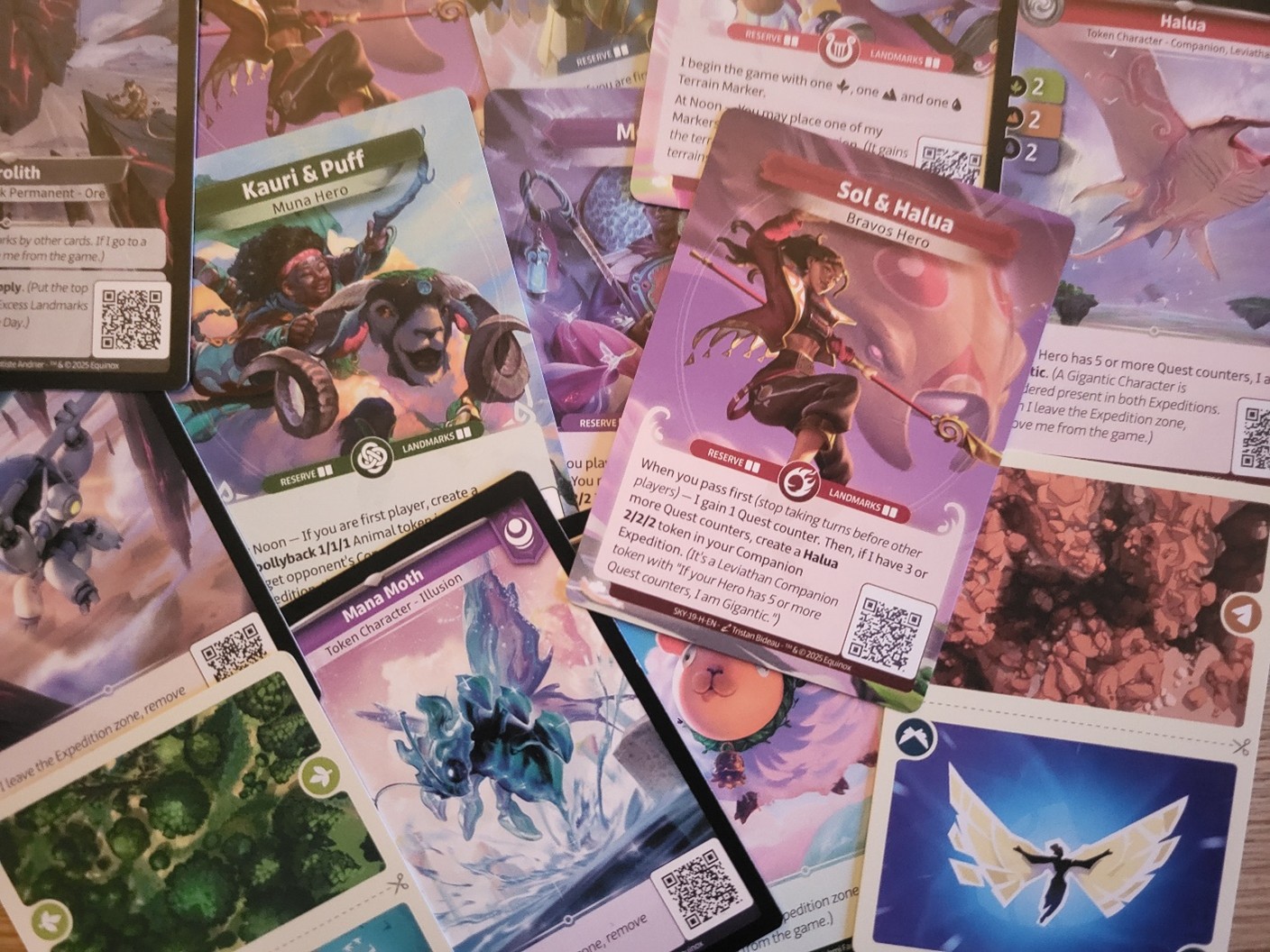
A box of boosters will snag you a playset of commons, on average, as well as plenty of Rare variants. In Altered, Rares are modified versions of Commons, either with a slightly better statline, modified ability or switched into a different colour (or a combination of all three); however, in a 40 card deck, only 15 cards can be Rares, and all cards are limited to 3 of a given name. You can also include up to 3 Uniques: these are weird, powerful variants that are literally one-of-a-kind: no-one else on the planet will have exactly the same Unique as you. You’ll always pull a few in a box, they’re always different but not gamebreaking, and always surprising – which means you can never truly meta against your opponent’s deck, a remarkable thing in this era of spoilers and net-decking.
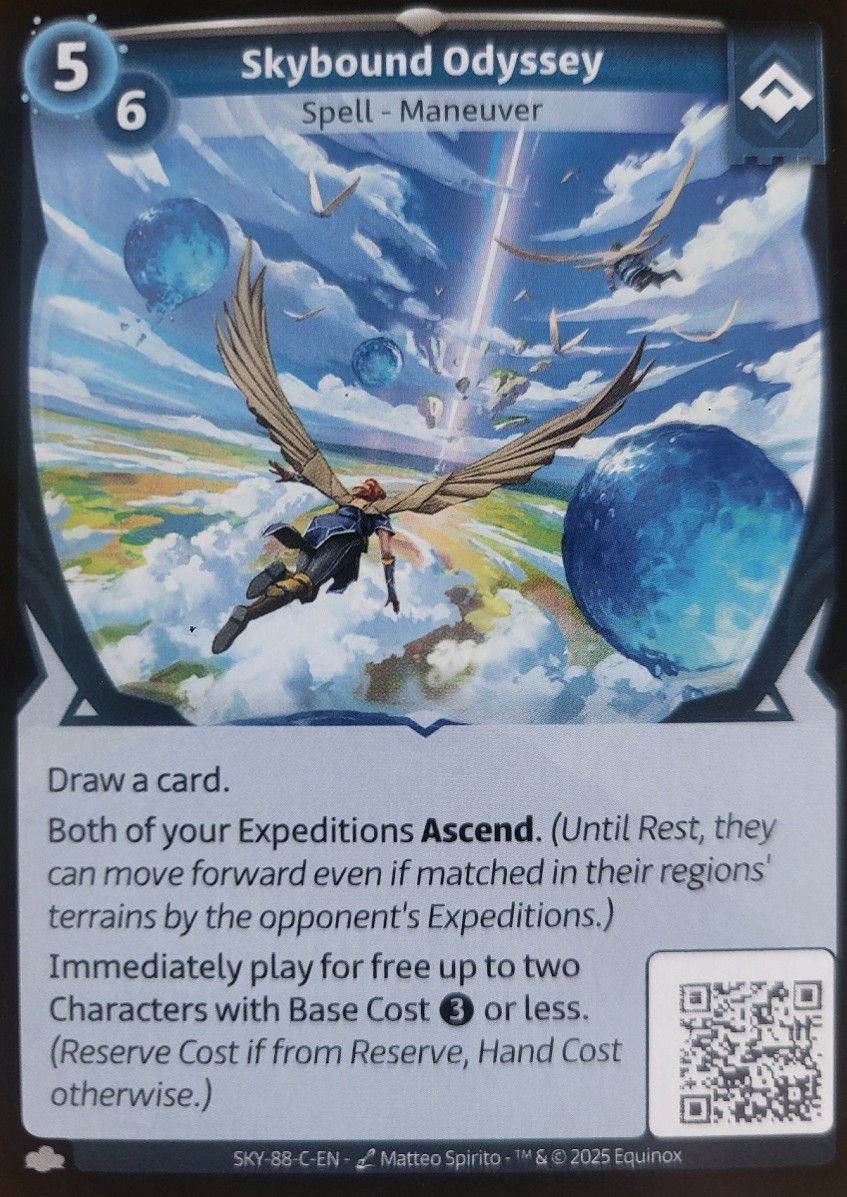
This set introduces a couple of fascinating new mechanics, encapsulated by the new Heroes (though the mechanics can be found all over). With ASCEND your expedition takes flight, advancing even if your opponent is as powerful as you in your region; dominating simply by force becomes even more difficult now, nerfing area majority decks and opening up new choices. AEROLITHS are new Landmarks that can be sacrificed to Resupply, putting a card in reserve (think of it as a face-up part of your hand), speeding up decks that want to engine build. WOOLYBACKS are, well, Sheep… but Sheep that you give to your opponent to give yourself card draw. All 3 mechanics pick up the pace of the game and open up new avenues for underused strategies – exactly what an expansion should do. Meanwhile, the new TOUGH keyword makes it harder to target your opponent’s cards directly – again, this is not a game of confrontation – whilst DEFECT steals your opponent’s token Characters, minimising the power of those pesky Token Swarm decks (or rounding up your own sheep!), and RUSH allows you to chain card plays, racing ahead of your opponent!
AXIOM is all about landmark sacrifice combos, triggering free sacrifice actions in the Dusk (end of turn) step with Aeroliths. Axiom have struggled to make a huge impact on the meta, despite having access to some really interesting cycling combos using their Reserve zone: playing Axiom is really like playing a tableau engine-builder, so if that’s your preferred game style, they are absolutely for you. As the most steampunk faction, this is totally on-brand: set up your complex interactions, and watch the machine run.
BRAVOS capitalises on Rush, playing 2 cards at once for added bonuses. Bravos decks have always been fast, and it’s no wonder that they have consistently dominated the recent competitive scene (which is why this set’s core art features them on the quest for the legendary leviathan Halua). However, this set they get a totally new playstyle that very high-risk/reward, aiming to be the first to pass before your opponent, triggering additional benefits (but of course, no longer being able to react to their plays). What I like about this is that so often storyline events in TCGs lead to a faction winning and continuing to dominate; instead, Bravos players are being given a totally fresh challenge that exists within the scope of the faction’s playstyle.
LYRA has much more board mobility this set and is much less about leveraging dice rolls. Now, yes, many people like that random nature of Lyra, but equally there’s few things competitive players hate more – and, indeed, roll-and-move is one of the most outdated of boardgame mechanics. In this set, Lyra is still about playing the odds, but here it is about reducing your opponent’s choices also, transforming the locations of the Tumult into single terrains and capitalising on this. It’s a logical development from exploiting 0 stats in the previous set (and there’s some new cards to build on this), but it’s good to see that Lyra maintain their sense of mischief whilst now having a more competitive edge.
MUNA is slow build card draw, adding tokens to your opponent to gain longer term advantage. Despite early dominance (Shrooms!), Muna have lagged a bit; total Forest transformation never really took off as a competitive archetype. Now, they have the joy of Woolybacks! Making sheep, and giving them to your opponent – and then triggering card effects of your own. Muna is undeniably the most challenging to build in this set but has set the competitive game all a-flutter: this is about careful deck design to exploit mechanical interactions. Crucially, the optimal Muna builds don’t require Rare versions of the cards to trigger their effects (though the colour swapped Bait is very handy); instead, it’s all about your skill. This is brilliantly conceived, an excellent exercise for the experienced card gamer which doesn’t create something OP for others to play against.
ORDIS is now all about taking advantage of ties through Ascend, and as a result Asleep has a totally new tactical edge. Ordis has consistently placed at the top end of the competitive game, and by revisiting their most iconic mechanic – not advancing – veteran Ordis players (such as, oh, me) see old cards taking on new uses, whilst the set providing enough for new interactions and mechanics to be interesting. If I have a criticism, I would say that Ordis have perhaps slightly weaker high-end characters in this set (Nike is just… not good) but the set’s flagship card, Skybound Odyssey, is one of its very best and supports everything from iconic Ordis swarm decks to newer, more nuanced tiebreaker decks.
YZMIR has its usual reliance of high cost spells, rewarding you for playing them, but now can steal your opponent’s characters! Guess which deck I’m building next… Their new hero creates deadly illusory moths when you cast spells, and improves at higher costs. It’s a bit of a slow build deck, but that’s why I like it. It really, really annoys your opponent by stealing their stuff and making it yours; it plays like nothing else in the game, and as such is a really exciting one to play and face. Yzmir have always performed well competitively, so again, a fresh challenge for them is very welcome.
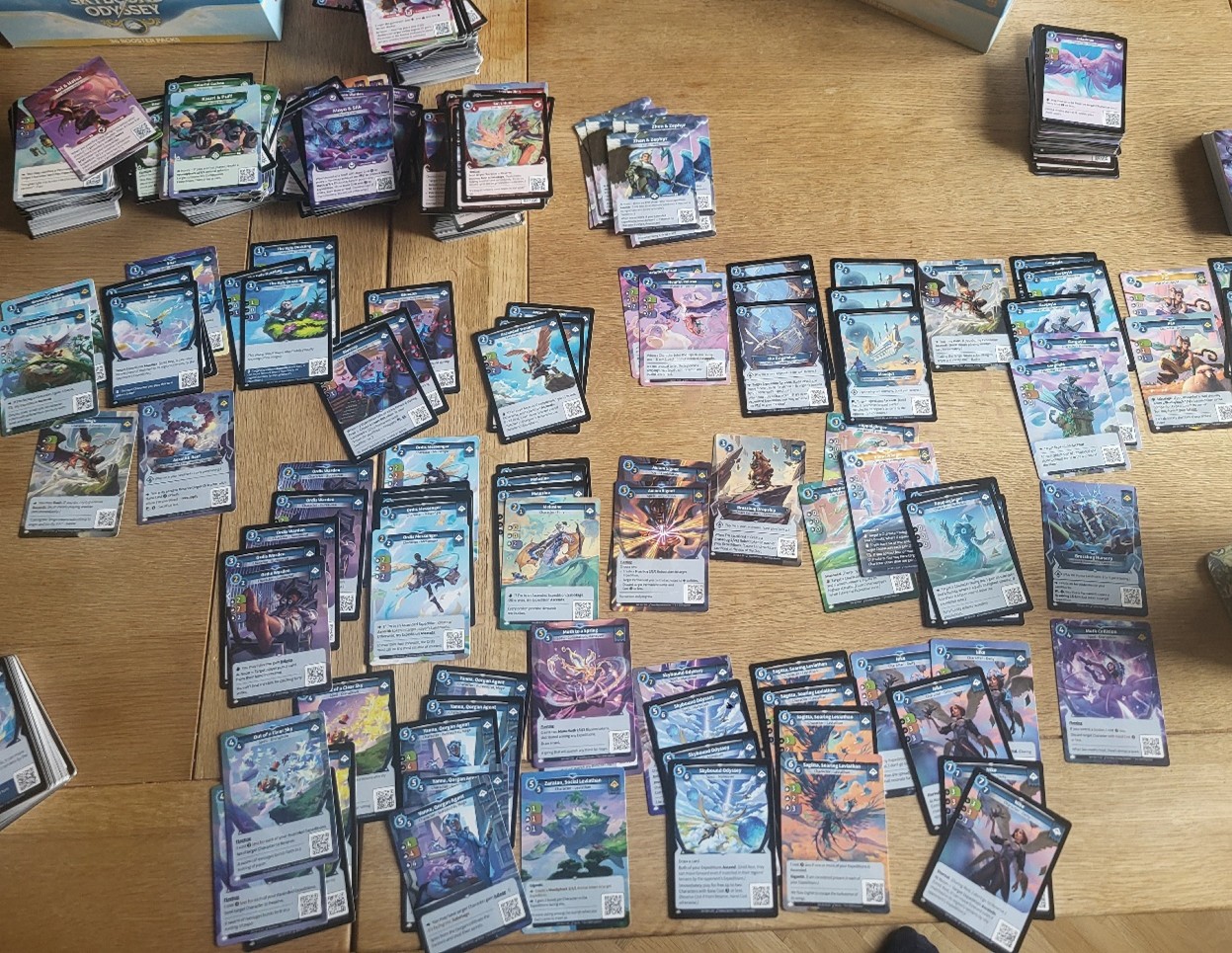
This is a great set, with each faction exploring totally new play styles yet feeling familiar. I love it, and if you like the look of it, remember the starter decks for all 6 factions are totally free to print and play from altered.gg AND the whole game can be played digitally on BGA by scanning your QR codes!
GIVEAWAY UPDATE
Come back in a couple of weeks for our next article – it’s the Great Xmas Gift Guide Giveaway 2025!
And the winner of our last giveaway was… Steve Tobin! Drop us a line for your prize!
Sam blogs @big_geekingout and as part of bigcomicpage.com with an emphasis on dad-gaming and IP content. Recovering competitive card gamer, infrequent skirmish wargamer, and average boardgamer. Decent Modeller with a fondness for terrain. Enthusiastic if not especially capable miniature Painter. Media and English Teacher, which is a cover for being a movie nerd. Reasonable cook. Occasional Parent.


Leave a Reply